
History of the
Malankara Orthodox Syrian Church
From the apostolic mission of St Thomas to the self-governing Church under the Catholicate of the East — the story of Indian Christianity in outline.
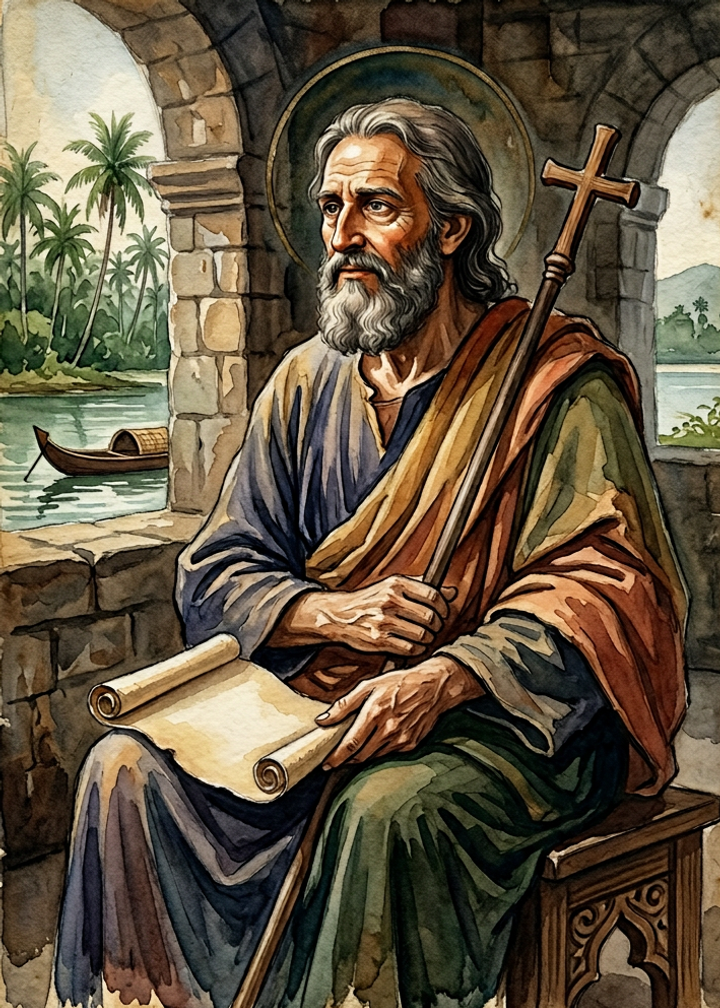
Christianity in India is among the oldest continuous Christian communities in the world. The St Thomas Christians — often called Syrian Christians — trace their origins to the apostolic age. Over centuries the community maintained its own life in Kerala while forming ties with Persia, Rome, and Antioch. Today the Malankara Orthodox Syrian Church, under the Catholicate of the East at Devalokam, Kottayam, is one of the major bodies that carry that heritage forward.
This page sketches the broad arc: apostolic foundation, eastward connections, the Portuguese and missionary era, and the path to the Catholicate in 1912. For the office of the Catholicos and the story of authority in Malankara, see the linked pages below.
Milestones in Indian Christianity.
Key moments from tradition and recorded history. Dates follow the reference sources.
Tradition holds that the Apostle Thomas founded the St Thomas Christians; writers from the 4th century onward refer to his ministry in India.
A colony of Persian Christians, traditionally 72 families with a bishop and clergy, settled in Kerala during the persecution of Sapor II.
Cosmos (c. 520) records a Malabar church with a bishop at Kalyan consecrated in Persia.
Vatican Syriac Codex 22 (Cranganore) names the primate as Metropolitan of the Throne of St Thomas and of the whole church of the Christians of India.
Vasco da Gama reached Calicut; missionaries later sought communion with Rome.
The Indian Church's link with the Persian patriarch was severed in favour of the Pope of Rome.
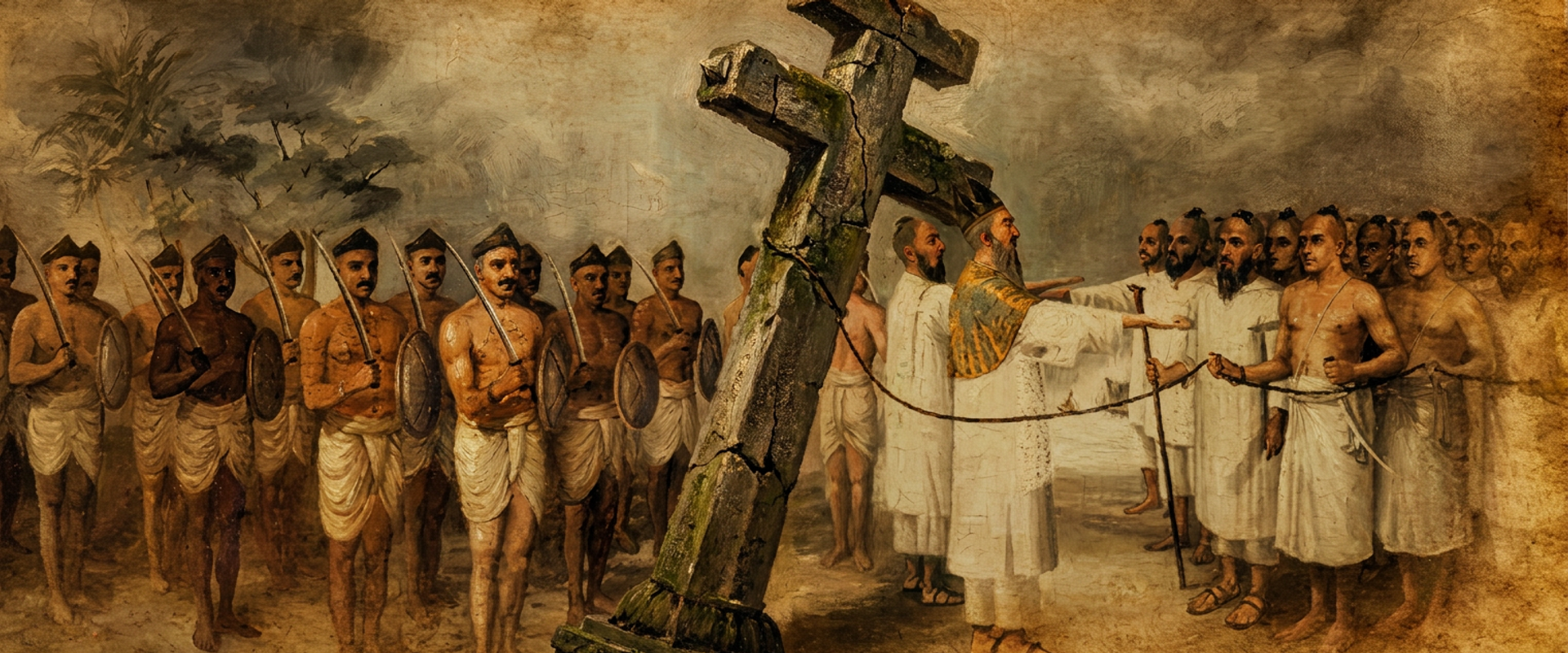
Revolt against Portuguese jurisdiction; a party under the Archdeacon upheld the independence of the Indian Church.
Confirmed Mar Thoma I in his episcopal rank and helped organise the Church.
Patriarch Peter III held a synod affirming communion with Antioch; court cases followed.
The court acknowledged the Patriarch's overall spiritual supervision over the Malankara Church.
Patriarch Abdul Messiah, with Mar Dionysius VI and the Malankara Church, established the Catholicate of the East in Malankara.
How the story unfolded.
A quick map of the eras — detail in the timeline above and the section below.
Apostolic and early India
Indian Christians ascribe their Church to St Thomas. Early communities spread along the coast; local leadership later centred on the Archdeacon (Jathikku Karthavyan), with administrative autonomy comparable to other ancient Eastern churches.
Persian connection
From at least the 4th century, ties with the Church of Persia brought bishops, refugees, and the Persian Crosses of Kerala. By 1301 the Indian primate bore a title linked to the Throne of St Thomas.
Portuguese and division
After 1498, missionaries worked for union with Rome; the Synod of Diamper (1599) shifted allegiance. The Coonan Cross Oath (1653) marked resistance; part of the community later returned to Roman allegiance, while others held to independence.
Toward self-governance
Antiochene help restored episcopal succession (1665). The 19th century brought CMS cooperation (ended 1836), synods, and courts. In 1912 the Catholicate of the East was established in Malankara with Patriarch Abdul Messiah — the line our Church continues today.
Metropolitan of the Throne of St Thomas.
In 1301 the Vatican Syriac Codex, written in Cranganore, described the Indian primate as "The Metropolitan of the Throne of St. Thomas, and of the whole church of the Christians of India." That apostolic memory runs through our history to the Catholicate today.
Read more: connections and turning points
The Indian Church's link with the East Syrian Church deepened from the time of Thomas of Cana. Bishops consecrated in Persia served in India; copper-plate grants record royal favour. The primate's titles evolved under Persian and later Islamic influence. In 1490 a delegation sought bishops from the Nestorian Patriarch — a chapter that ended as the Portuguese arrived.
Portuguese missionaries, arriving with colonial power, pressed for union with Rome. After the Synod of Diamper, Jesuit archbishops governed; discontent led to the Coonan Cross Revolt (1653). Some returned to Roman allegiance; others, led by the Archdeacon, insisted on the Church's administrative independence even when episcopal guidance was scarce.
Help from Antioch restored order (1665). In the 19th century, British residents took interest in the Malankara Syrian Church; a seminary was founded (1815), and cooperation with the CMS ran from 1816 until 1836 — an experiment that divided the community into three paths (see pillars above). Appeals to Antioch led to the Synod of Mulanthuruthy (1876) and later litigation. When Metropolitan Mar Dionysius VI stood firm against demands for absolute allegiance, the Church turned to Patriarch Abdul Messiah; on 15 September 1912 the Catholicate of the East was established in Malankara at Niranam.
For authority from Archdeacons through the Supreme Court judgment of 1958, see /the-catholicate.
With the establishment of the Catholicate in 1912, the Indian Church regained a self-governing head recognised in the tradition of the East. Catholicos is an office known in the Antiochene Syrian Church; in Malankara it crowns centuries of apostolic memory and local leadership.
In grateful hearts we offer praise and thanks to God Almighty who has guided this Church through the centuries to fulfil His divine purpose. May His name be glorified, forever and ever.